Engineering-driven aluminum casting and precision manufacturing solutions

Resources
Technical articles and practical sourcing answers for aluminum casting and precision machining projects. Explore process guidance, material insights, inspection methods, and project planning FAQs.

Technical Knowledge
12 articles per page
-
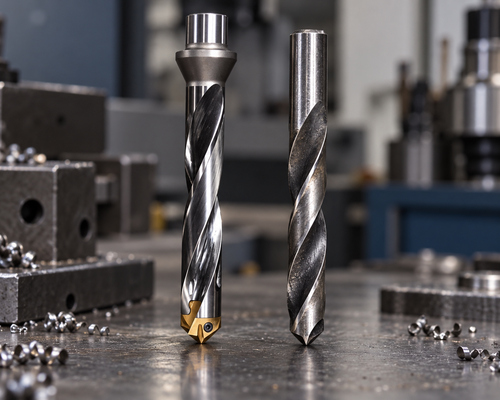
Replaceable Tip Drills vs Twist Drills Which Is Better for Precision Machining
Read Article: Replaceable Tip Drills vs Twist Drills Which Is Better for Precision MachiningHole machining is one of the most common operations in CNC manufacturing. The quality of a drilled hole directly affects dimensional accuracy, assembly performance, and overall…
-

Solid vs Hollow Sand Cores How to Choose the Right Core Design for Sand Casting
Read Article: Solid vs Hollow Sand Cores How to Choose the Right Core Design for Sand CastingSand cores play a critical role in sand casting by forming internal cavities, holes, and other complex features that cannot be created directly by the mold.…
-
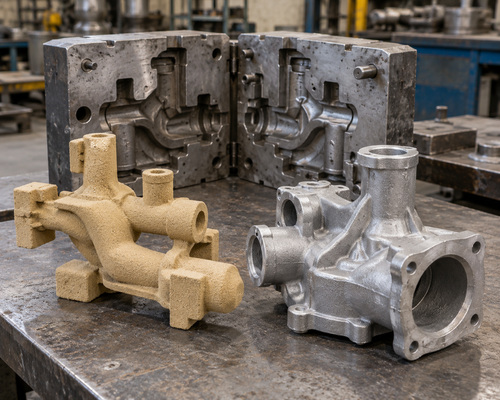
The Role of Sand Cores in Complex Aluminum Gravity Die Castings
Read Article: The Role of Sand Cores in Complex Aluminum Gravity Die CastingsGravity die casting is widely used to produce high-quality aluminum components with excellent dimensional accuracy and mechanical properties. However, when a casting includes internal.
-
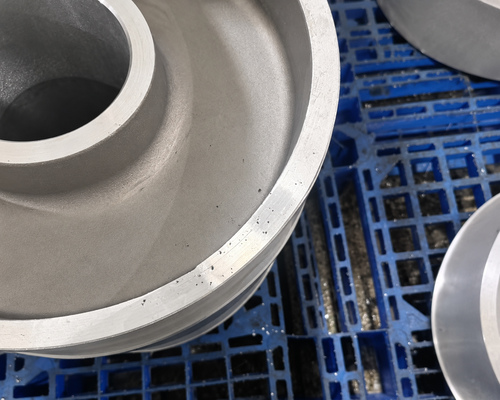
Preventing Sand Inclusion Defects in Aluminum Gravity Casting
Read Article: Preventing Sand Inclusion Defects in Aluminum Gravity CastingSand inclusion is one of the most common defects in aluminum gravity casting. It can reduce casting density, compromise pressure tightness, and affect the mechanical strength…
-

Shrinkage Defects in Gravity Die Casting Aluminum Parts Causes and Control Methods
Read Article: Shrinkage Defects in Gravity Die Casting Aluminum Parts Causes and Control MethodsShrinkage cavities and shrinkage porosity are among the most common internal defects found in gravity die cast aluminum parts. These defects are most likely to occur…
-
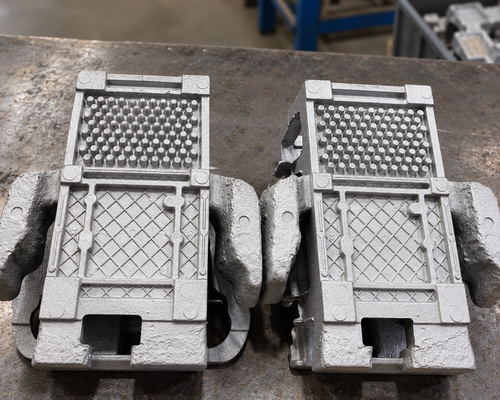
Misrun Defects in Aluminum Gravity Casting Causes and Prevention
Read Article: Misrun Defects in Aluminum Gravity Casting Causes and PreventionA misrun defect is one of the most common quality issues in aluminum gravity casting. It occurs when molten aluminum fails to completely fill the mold…
-

Porosity Control in Aluminum Alloy Gravity Casting
Read Article: Porosity Control in Aluminum Alloy Gravity CastingPorosity is one of the most common internal defects in aluminum gravity casting. It typically appears as fine surface pinholes or smooth spherical voids within the…
-

Heat Treatment Distortion in Aluminum Gravity Castings Causes and Prevention
Read Article: Heat Treatment Distortion in Aluminum Gravity Castings Causes and PreventionHeat treatment is an essential process for improving the mechanical properties of aluminum gravity castings. However, castings with complex geometries or uneven wall thicknesses are more.
-
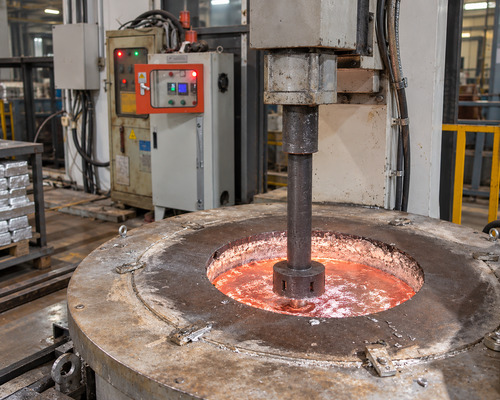
Aluminum Melt Degassing in Gravity Die Casting Common Problems and Solutions
Read Article: Aluminum Melt Degassing in Gravity Die Casting Common Problems and SolutionsDegassing is one of the most important steps in the gravity die casting process. Its primary purpose is to remove dissolved hydrogen from molten aluminum, reducing…
-
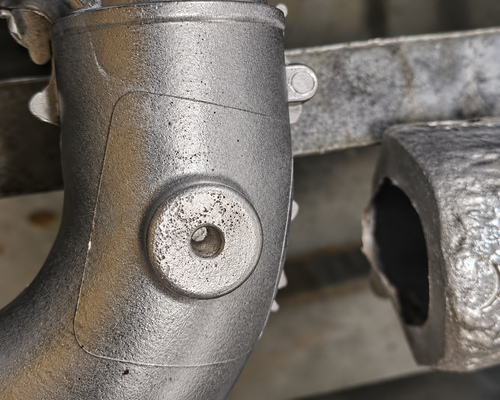
Common Surface Defects in Aluminum Gravity Castings and How to Prevent Them
Read Article: Common Surface Defects in Aluminum Gravity Castings and How to Prevent ThemThe surface quality of an aluminum gravity casting affects more than just its appearance. It also influences subsequent machining, coating, anodizing, and other surface finishing processes..
-

Aluminum Low Pressure Die Casting Advantages Applications and Manufacturing Solutions
Read Article: Aluminum Low Pressure Die Casting Advantages Applications and Manufacturing SolutionsWith the growing demand for lightweight, high-strength, and reliable components in industries such as electric vehicles, industrial equipment, automation, and communication systems.
-
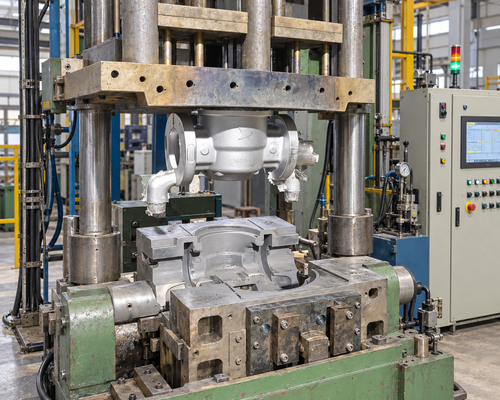
Multi-Stage Pressure Control in Low Pressure Aluminum Casting
Read Article: Multi-Stage Pressure Control in Low Pressure Aluminum CastingLow pressure die casting (LPDC) uses controlled air pressure to push molten aluminum upward through a riser tube and into the mold cavity. For aluminum castings,…
Answers for Sourcing and Project Planning
Find the documents, lead times, order quantities, manufacturing scope, inspection options, and confidentiality terms needed to start a project.
Information Required for an Accurate Quotation +
Please provide complete technical documents. A STEP AP214 3D model (.stp or .step) is preferred. A 2D PDF drawing should show tolerances, machining datums, draft angles, surface roughness, leak-tightness requirements, and heat treatment; DWG or DXF files are optional. Please also include the alloy grade, order quantity, required machining condition, surface treatment, and service environment.
Quotation Response Time +
Simple drawings are normally reviewed within one business day, with feedback available in about 12 hours. Complex parts that require DFM review are normally evaluated within 24 hours. Mark urgent projects clearly and our team will prioritize a same-day response where possible.
Minimum Order Quantity and Small-Batch Support +
Our standard MOQ is 10 pieces. Prototype and small-batch trial orders are supported and quoted separately. Delivery can be coordinated by project, and annual framework orders can be released in batches to reduce inventory pressure.
Available Casting and Supporting Processes +
Capabilities include gravity casting, sand casting, low-pressure casting, tooling design and manufacturing, three-axis to five-axis CNC machining, turning, drilling, tapping, deburring, grinding, polishing, shot blasting, ultrasonic cleaning, T6 or T8 heat treatment, stress relief, dimensional inspection, leak testing, spectrographic analysis, and salt-spray testing.
Commonly Used Aluminum Alloys +
Common grades include A356, A356.2, A357, A360, A380, AL106, ADC12, and AC4A. Customer-specified alloys are also supported, and material certificates or MTR documentation can be supplied when required.
Tooling Sampling and Production Lead Times +
Typical tooling lead time is 35 to 45 days, followed by a 30 to 40 day sampling cycle. Production processing is generally 30 to 40 days, while repeat batch orders are commonly completed in 30 to 45 days. Staged delivery can be arranged.
Custom Manufacturing Process +
The standard workflow is drawing submission, engineering evaluation, quotation, sample production, sample approval, volume production, quality inspection, packaging, and shipment.
Available Payment Terms +
Standard terms are a 50% deposit and 50% before shipment. The remaining balance is settled before the finished goods are dispatched.
Pre-Shipment Inspection Scope +
Inspection options include full dimensional checks, caliper and CMM measurement, leak testing, material spectrographic analysis, X-ray inspection, and salt-spray testing. Material certificates, dimensional reports, and heat-treatment reports can be supplied, and third-party inspection can be supported when agreed in the order.
Confidential Drawing and Project Data Protection +
Customer drawings and 3D models can be protected under an NDA, stored in encrypted internal systems, and restricted to project use within the factory. Files are retained or securely deleted after project completion according to the agreed requirement.