Engineering-driven aluminum casting and precision manufacturing solutions

Resources
Technical articles and practical sourcing answers for aluminum casting and precision machining projects. Explore process guidance, material insights, inspection methods, and project planning FAQs.

Technical Knowledge
12 articles per page
-
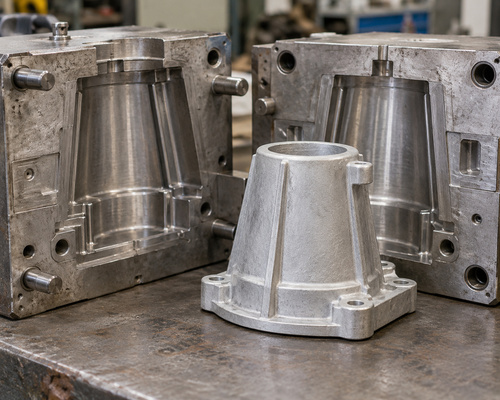
Why Does Draft Angle Affect the Quality of Aluminum Gravity Castings
Read Article: Why Does Draft Angle Affect the Quality of Aluminum Gravity CastingsIn aluminum gravity casting projects, customers often focus on material selection, heat treatment, and machining accuracy, while an important design factor is sometimes overlooked – draft.
-

Aluminum Casting DFM Checklist How to Prevent Manufacturing Issues Before Production
Read Article: Aluminum Casting DFM Checklist How to Prevent Manufacturing Issues Before ProductionFor custom aluminum casting projects, product quality is determined long before molten metal is poured. While casting processes play a critical role, many manufacturing problems originate.
-
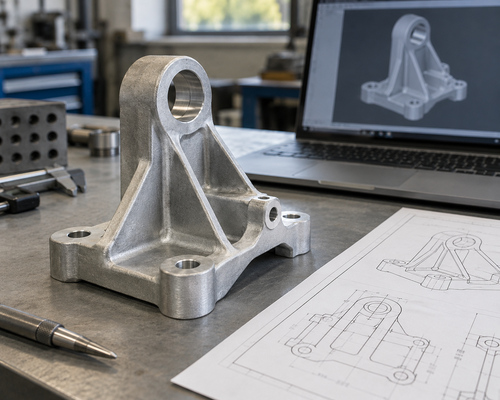
DFM Design Optimization Improving Manufacturability and Reducing CNC Machining Costs
Read Article: DFM Design Optimization Improving Manufacturability and Reducing CNC Machining CostsFor precision die-cast components, product quality depends on more than just materials and machining equipment. A well-planned Design for Manufacturability (DFM) strategy during the early.
-

Optimizing Warehouse Management for Greater Production Efficiency and Reliable Delivery
Read Article: Optimizing Warehouse Management for Greater Production Efficiency and Reliable DeliveryEfficient warehouse management is an important part of modern aluminum casting manufacturing. Beyond keeping materials organized, a well-planned warehouse supports production efficiency.
-

Strengthening Safety Management to Build a Safe and Stable Manufacturing Environment
Read Article: Strengthening Safety Management to Build a Safe and Stable Manufacturing EnvironmentIn aluminum casting and precision machining, workplace safety is more than a regulatory requirement-it is an essential part of maintaining stable production, consistent product quality, and.
-

Strengthening Factory Safety Management Through Fire Emergency Training
Read Article: Strengthening Factory Safety Management Through Fire Emergency TrainingTo continuously improve workplace safety awareness and enhance employees’ emergency response capabilities, we recently organized a fire safety training session and emergency response drill.
-
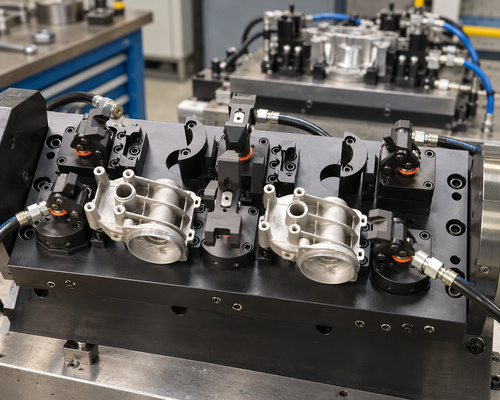
Pneumatic Fixture vs Hydraulic Fixture for CNC Machining of Aluminum Castings How to Choose the Right Solution
Read Article: Pneumatic Fixture vs Hydraulic Fixture for CNC Machining of Aluminum Castings How to Choose the Right SolutionDuring CNC machining of aluminum alloy castings, fixture selection plays a critical role in machining efficiency, dimensional accuracy, surface quality, and overall production yield.
-

HSS vs Carbide Cutting Tools for Aluminum Castings How to Choose the Right Tool
Read Article: HSS vs Carbide Cutting Tools for Aluminum Castings How to Choose the Right ToolAluminum castings often contain characteristics such as porosity, oxide layers, inclusions, and localized hardness variations, making tool selection an important factor in machining.
-

Spiral Point Tap vs Spiral Flute Tap vs Form Tap How to Choose the Right Threading Solution for Aluminum Components
Read Article: Spiral Point Tap vs Spiral Flute Tap vs Form Tap How to Choose the Right Threading Solution for Aluminum ComponentsThread tapping may seem like a routine CNC machining operation, but in practice, an incorrect tap selection is one of the most common causes of thread-related…
-

Why Do Many Aluminum Castings Still Fail Assembly After CNC Machining Choosing the Right Machining Strategy for Precision Aluminum Components
Read Article: Why Do Many Aluminum Castings Still Fail Assembly After CNC Machining Choosing the Right Machining Strategy for Precision Aluminum ComponentsIn industries such as new energy vehicles, hydraulic systems, robotics, and industrial automation, dimensional accuracy is one of the most critical requirements for aluminum components.
-

Anodizing Aluminum Automotive Castings When to Choose Standard or Hard Anodizing
Read Article: Anodizing Aluminum Automotive Castings When to Choose Standard or Hard AnodizingAfter gravity casting, low pressure casting, or CNC machining, automotive aluminum alloy castings may require anodizing to improve surface performance.
-

Laser Marking for Aluminum Castings Improving Part Traceability and Identification
Read Article: Laser Marking for Aluminum Castings Improving Part Traceability and IdentificationAs quality and traceability requirements continue to increase across industries such as automotive, industrial equipment, medical devices, and heavy machinery, laser marking has become a.
Answers for Sourcing and Project Planning
Find the documents, lead times, order quantities, manufacturing scope, inspection options, and confidentiality terms needed to start a project.
Information Required for an Accurate Quotation +
Please provide complete technical documents. A STEP AP214 3D model (.stp or .step) is preferred. A 2D PDF drawing should show tolerances, machining datums, draft angles, surface roughness, leak-tightness requirements, and heat treatment; DWG or DXF files are optional. Please also include the alloy grade, order quantity, required machining condition, surface treatment, and service environment.
Quotation Response Time +
Simple drawings are normally reviewed within one business day, with feedback available in about 12 hours. Complex parts that require DFM review are normally evaluated within 24 hours. Mark urgent projects clearly and our team will prioritize a same-day response where possible.
Minimum Order Quantity and Small-Batch Support +
Our standard MOQ is 10 pieces. Prototype and small-batch trial orders are supported and quoted separately. Delivery can be coordinated by project, and annual framework orders can be released in batches to reduce inventory pressure.
Available Casting and Supporting Processes +
Capabilities include gravity casting, sand casting, low-pressure casting, tooling design and manufacturing, three-axis to five-axis CNC machining, turning, drilling, tapping, deburring, grinding, polishing, shot blasting, ultrasonic cleaning, T6 or T8 heat treatment, stress relief, dimensional inspection, leak testing, spectrographic analysis, and salt-spray testing.
Commonly Used Aluminum Alloys +
Common grades include A356, A356.2, A357, A360, A380, AL106, ADC12, and AC4A. Customer-specified alloys are also supported, and material certificates or MTR documentation can be supplied when required.
Tooling Sampling and Production Lead Times +
Typical tooling lead time is 35 to 45 days, followed by a 30 to 40 day sampling cycle. Production processing is generally 30 to 40 days, while repeat batch orders are commonly completed in 30 to 45 days. Staged delivery can be arranged.
Custom Manufacturing Process +
The standard workflow is drawing submission, engineering evaluation, quotation, sample production, sample approval, volume production, quality inspection, packaging, and shipment.
Available Payment Terms +
Standard terms are a 50% deposit and 50% before shipment. The remaining balance is settled before the finished goods are dispatched.
Pre-Shipment Inspection Scope +
Inspection options include full dimensional checks, caliper and CMM measurement, leak testing, material spectrographic analysis, X-ray inspection, and salt-spray testing. Material certificates, dimensional reports, and heat-treatment reports can be supplied, and third-party inspection can be supported when agreed in the order.
Confidential Drawing and Project Data Protection +
Customer drawings and 3D models can be protected under an NDA, stored in encrypted internal systems, and restricted to project use within the factory. Files are retained or securely deleted after project completion according to the agreed requirement.