Engineering-driven aluminum casting and precision manufacturing solutions

ADC12 Aluminum Die-Casting Alloy
ADC12 is a widely used Al-Si-Cu die-casting alloy known for its good fluidity and suitability for complex, thin-wall components. KCDCAST supports high-pressure die casting, tooling optimization, precision CNC machining, and consistent production of customized aluminum components.
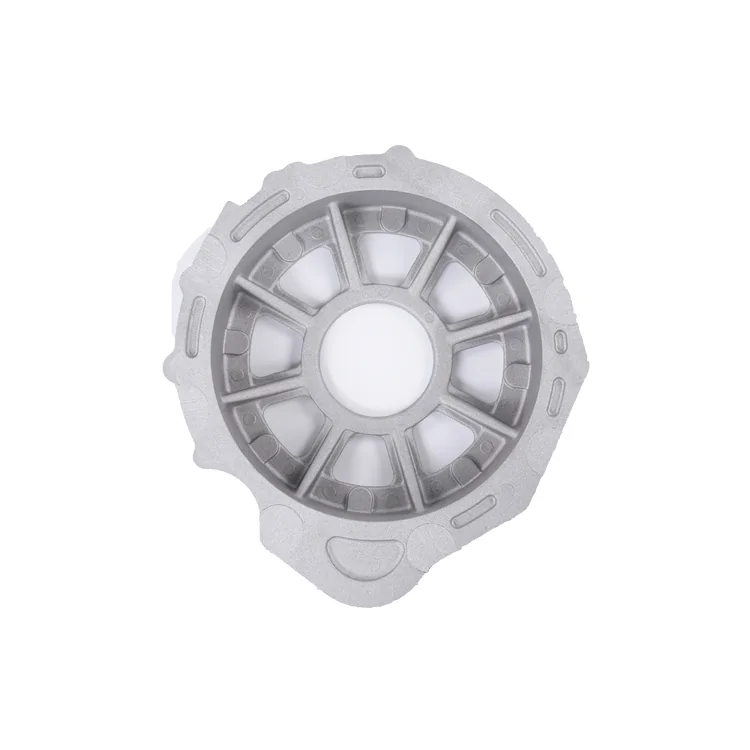
 Material application illustration
Grade
ADC12
Alloy System
Al-Si-Cu die-casting alloy
Reference
JIS ADC12 / YL113
Primary Process
High-pressure die casting
Material Overview
Choose the alloy around the drawing, casting process and final acceptance requirements.
ADC12 Material Benefits
- Good fluidity for complex die-casting geometries
- Suitable for selected thin-wall structures
- Good filling characteristics for intricate mold features
- Good dimensional repeatability with optimized tooling
- Suitable for high-volume production
- Cost-effective for many industrial die-cast components
Design Considerations
- Wall thickness and flow length should be evaluated during DFM
- Gate location and venting are important for reducing filling defects
- Internal porosity should be considered when designing machined or pressure-containing areas
- Corrosion and surface finishing requirements should be reviewed before material approval
- Standard ADC12 die castings should not automatically be assumed suitable for T6 heat treatment
ADC12 Technical Data
Chemical composition and mechanical reference values for your initial material review.
Chemical Composition
| Element | Mass fraction |
|---|---|
| Si | 9.6-12.0% |
| Cu | 1.5-3.5% |
| Fe | ≤1.30% |
| Mg | ≤0.30% |
| Mn | ≤0.50% |
| Zn | ≤1.0% |
| Ni | ≤0.50% |
| Sn | ≤0.30% |
| Al | Balance |
Mechanical Properties
| Property | Reference value |
|---|---|
| Tensile strength | ≥280 MPa |
| Yield strength | ≥150 MPa |
| Elongation | ≥1.5% |
| Brinell hardness | ≥85 HB |
Reference values only. Temper, test method, sampling position and the applicable specification must be confirmed for each project.
Please specify the required alloy standard and heat treatment condition on your drawing or enquiry.
International Grade References
Use grade names as a starting point when discussing the applicable material specification.
Japan
ADC12
China
YL113
United States
A383, commonly referenced
Europe
EN AC-46100
Cross-references do not guarantee identical limits or performance. Confirm the governing standard and revision before substituting a grade.
ADC12 Manufacturing Options
KCDCAST provides high-pressure die-casting solutions for ADC12 components requiring complex geometries, thin-wall structures, and repeatable mass production.
Application areas
— Consumer electronics; Automotive accessories; Motor housings; Heat sinks; General mechanical enclosures.
Recommended processing options
— High-pressure die casting; Automated trimming; CNC machining; Shot blasting; Protective finishing.

High-Pressure Die Casting
High-Pressure Die Casting
Suitable for complex housings, electronic enclosures, covers, brackets, and components with integrated ribs and mounting features.

DFM and Precision Machining
DFM and Tooling Optimization
Evaluation of wall thickness, filling distance, gate location, venting, and mold structure helps improve manufacturability and production consistency.
Precision CNC Machining
Secondary machining of mounting surfaces, holes, threads, and functional interfaces according to customer drawings.
Surface Finishing and Quality Inspection
Surface Finishing
Deburring, shot blasting, coating, and other suitable finishing processes according to project specifications.
Quality Inspection
Dimensional inspection, chemical composition verification, visual inspection, and additional testing based on customer requirements.
ADC12 FAQs
A few details help us review your material requirements more effectively.
Why is ADC12 widely used for high-pressure die casting?
ADC12 is widely used for high-pressure die casting because of its good fluidity, castability and suitability for complex component geometries. It offers a practical balance of production efficiency, dimensional consistency and cost, making it a common choice for industrial housings, electronic enclosures and automotive components.
Is ADC12 suitable for thin-wall aluminum components?
ADC12 is suitable for many thin-wall and complex die-cast components because of its good fluidity. However, achievable wall thickness depends on flow length, geometry, die design, venting and machine capability. Thin-wall designs should be reviewed and validated through engineering assessment and production trials.
What is the difference between ADC12 and A380?
ADC12 is a Japanese JIS die-casting alloy designation, while A380 is an American aluminum alloy designation. Both belong to the Al-Si-Cu die-casting alloy family, but their chemical composition limits and specified requirements differ. They may be comparable for certain applications, but they are not automatically interchangeable. Any substitution should be reviewed against the applicable specifications and customer requirements.
Can ADC12 components be CNC machined?
Yes. ADC12 components can be CNC machined to achieve accurate holes, threads, mounting interfaces and other functional dimensions. Machining allowances and datum references should be considered during die design. For critical machined surfaces, casting quality and the risk of exposing internal porosity should also be evaluated.
Is ADC12 suitable for anodizing or T6 heat treatment?
ADC12 can be anodized in certain applications, but its relatively high silicon and copper contents can make decorative appearance and color uniformity difficult to control. Sample trials are recommended before confirming the finish. Conventional high-pressure die-cast ADC12 is generally not suitable for routine T6 solution heat treatment because trapped gas may cause blistering or distortion. Any special treatment requires process validation.
Review Your ADC12 Component
Share your drawing, alloy specification and expected volume. We will review the casting process and downstream requirements with you.