Engineering-driven aluminum casting and precision manufacturing solutions

Properties and Applications of A356 Aluminum Alloy
Review the composition, mechanical properties, heat-treatment response, and common engineering applications of A356 aluminum alloy.
A356 is one of the most commonly-used and representative high-performance alloys in the field of cast aluminum alloys, belonging to the Al-Si-Mg (Aluminum-Silicon-Magnesium) cast-alloy system.
It is well-known for its excellent castability, favorable corrosion resistance, and outstanding strength-toughness balance after heat treatment. It is widely adopted in automotive wheels, aerospace structural components, marine parts, precision industrial equipment and other fields.
Grade System
A356 falls within the 3xx.x cast-alloy series defined by the Aluminum Association (AA) of the United States. Silicon serves as its major alloying element, while magnesium delivers strengthening effects via heat treatment.
The prefix “A” in the grade designation stands for a high-purity modified variant of alloy 356, featuring tighter control over impurities, especially iron. A356 is a US-standard grade, and equivalent materials carry different designations across various countries. The cross-reference of international grades is listed below:
- United States: A356 (AA / ASTM Standard)
- China: ZL101A (GB/T Standard)
- Japan: AC4CH (JIS H5202 Standard)
- Europe: AlSi7Mg0.3 (EN 1706)
- International: AlSi7Mg0.3 (ISO 3522)
The A356 family covers three sub-grades with progressively stricter impurity limits: A356.0, A356.1 and A356.2.
A356.0 is a general-purpose casting grade and the most widely-used aluminum alloy.
A356.1 offers improved properties and permits partial recycled-material content, delivering intermediate performance among the three variants.
A356.2 provides the best combination of strength and ductility, yet comes with the highest cost.
Both A356.0 and A356.2 are among the regularly-used aluminum alloy grades at our company.
Chemical Composition
The chemical composition of A356 is precisely engineered, and each element serves a distinct metallurgical purpose.
The core difference between A356 and standard 356.0 lies in iron content. A356 limits Fe to ≤0.20%, while 356.0 allows up to ≤0.60%. Researches show that elongation drops sharply when Fe content exceeds 0.60%.
| Element | Content | Function |
|---|---|---|
| Silicon (Si) | 6.5-7.5 | Key casting element: improves melt fluidity and reduces shrinkage porosity |
| Magnesium (Mg) | 0.25-0.45 | Significantly increases mechanical strength |
| Iron (Fe) | ≤0.20 | Controlling element. Iron content determines the toughness and fatigue life of aluminum alloys |
Mechanical Properties
The T6 condition (solution heat treatment + artificial aging) is the most common delivery condition for A356, maximizing the alloy’s strength-toughness performance.
Standard T6 heat-treatment procedure:
Solution treatment: Heat to approximately 530 °C and hold (typically 6-8 hours), so that Mg and Si are fully dissolved into the aluminum matrix.
Quenching: Rapid water cooling to “freeze” the high-temperature solid-solution structure down to room temperature.
Artificial aging: Hold at around 155 °C (typically 4-8 hours) to precipitate fine and uniform Mg₂Si strengthening phases.
After T6 treatment, the yield strength of the alloy is roughly doubled compared with the as-cast condition, while maintaining reasonable ductility.

A356 Castings Before Heat Treatment

A356 Castings After Heat Treatment
| Property Index | Typical Values (T6 Condition) | Typical Values (F-Condition / As-Cast) |
|---|---|---|
| Tensile Strength | 230-320 MPa | ≥ 160 MPa |
| Yield Strength | 200-240 MPa | ≥ 120 MPa |
| Elongation | 3-8% | ≥ 2.0% |
| Brinell Hardness (HB) | 75-100 | ~ 55 |
| Modulus of Elasticity | ~ 71 GPa | — |
| Fatigue Strength | ~ 90 MPa | — |
Main Application Fields
Benefiting from the combination of light weight, high strength, corrosion resistance and excellent castability, A356 is widely used in automotive and industrial sectors.
Automotive Applications
Cylinder heads, intake manifolds, oil sumps, gearbox housings for engines;
Suspension control arms, steering knuckles, brake-system components.
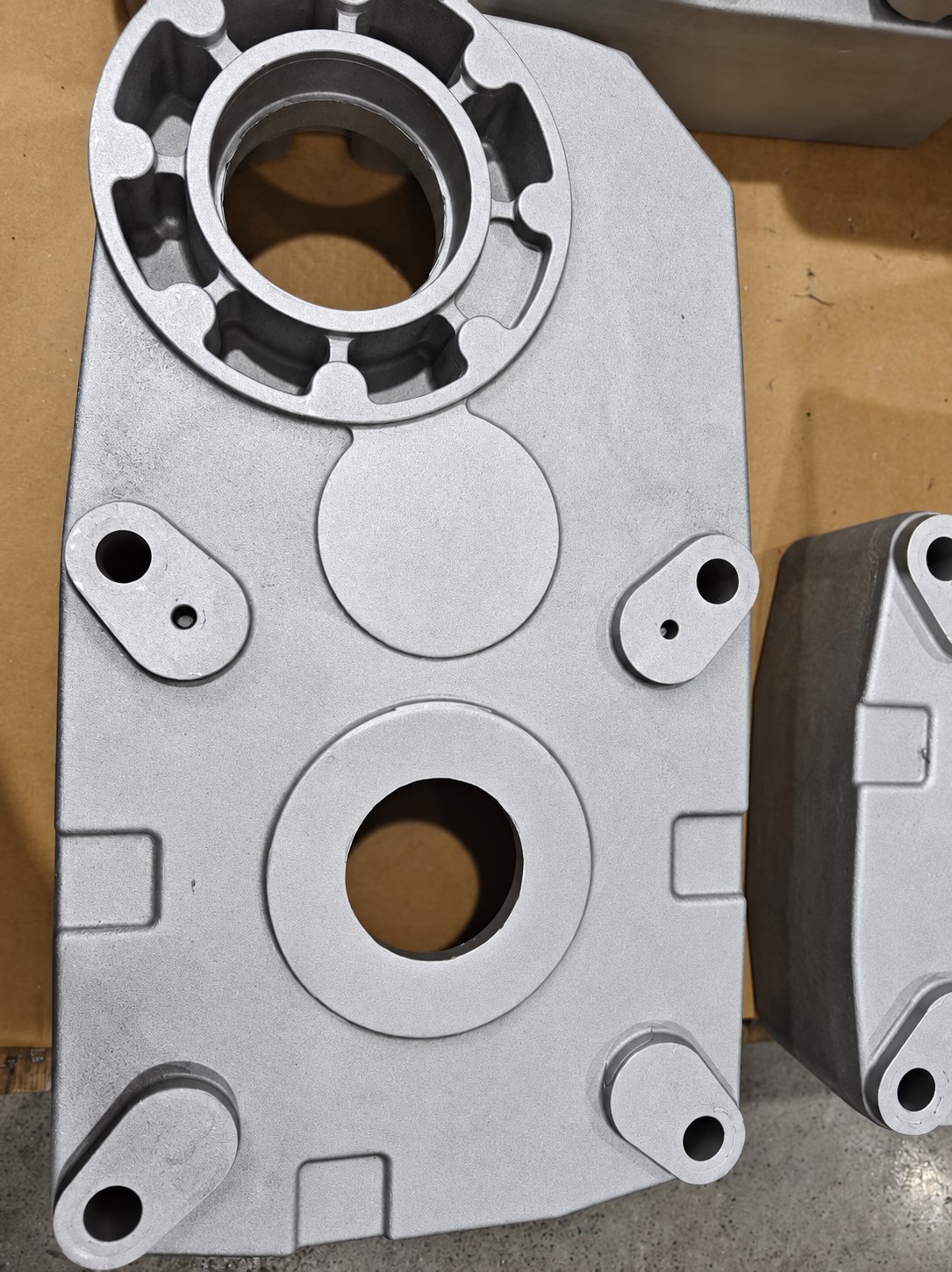
A356 Cast-Aluminum Automotive Gearbox Housing
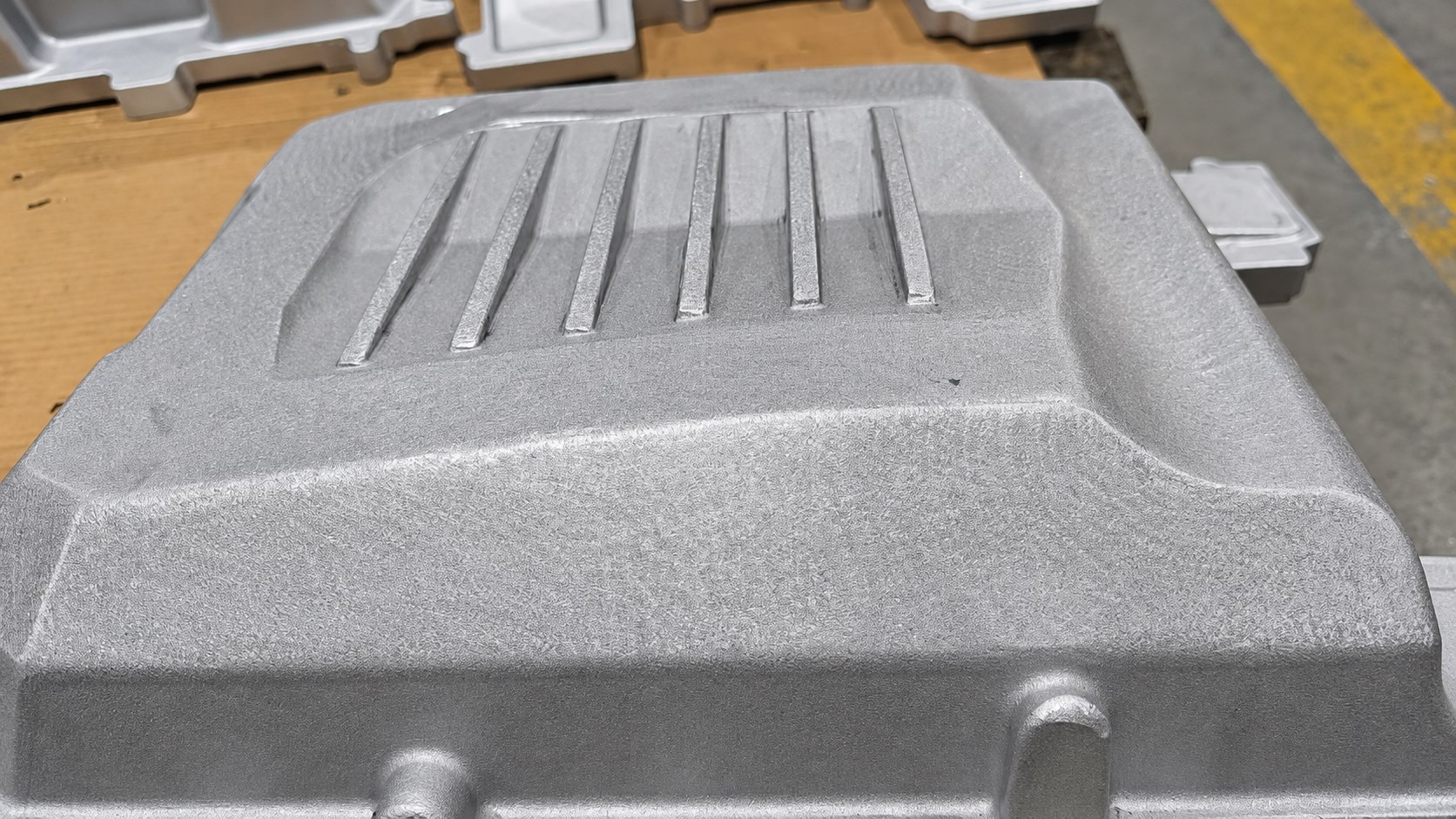
A356 Cast-Aluminum Engine Upper Housing
Industrial Machinery & Energy
Pump bodies, compressor housings, hydraulic valve bodies;
Wind-power equipment components, motor housings.

A356 Cast-Aluminum Motor Housing
Summary
Boasting the unique combination of excellent castability, heat-treatable strengthening performance, low-impurity content and high toughness, A356 aluminum alloy acts as an “all-round performer” among cast aluminum alloys. Ranging from mass-produced automotive wheels to high-precision aerospace components, A356-T6 ranks among the preferred materials where light weight, complex geometries and reliable strength are required.