Gate, riser, and flash removal
Grinding + trimming
Surface cleaning and preparation
Shot + sand blasting
Geometry recovery before machining
Straightening
Post-Casting Operations
Post-Casting Treatment Options
Post-casting operations are planned together to protect machining stock, datums, part geometry, and surface condition.
Cleaning & Trimming
Remove gates, risers, flash, adhered sand, and residue while protecting functional stock and datums.
Heat Treatment
Use T4, T6, T7, or T8 processes to develop the required microstructure and mechanical behavior.
Blasting
Apply shot or sand blasting to clean, texture, and prepare the surface for inspection or finishing.
Dimensional Straightening
Correct heat- or solidification-related distortion before critical machining and assembly.
Operation Planning
Post-Casting Operations
Coordinate casting cleanup, heat treatment, straightening, and surface preparation with the requirements of the next operation.
Casting Preparation
Gate and riser removal / Grinding & deburring
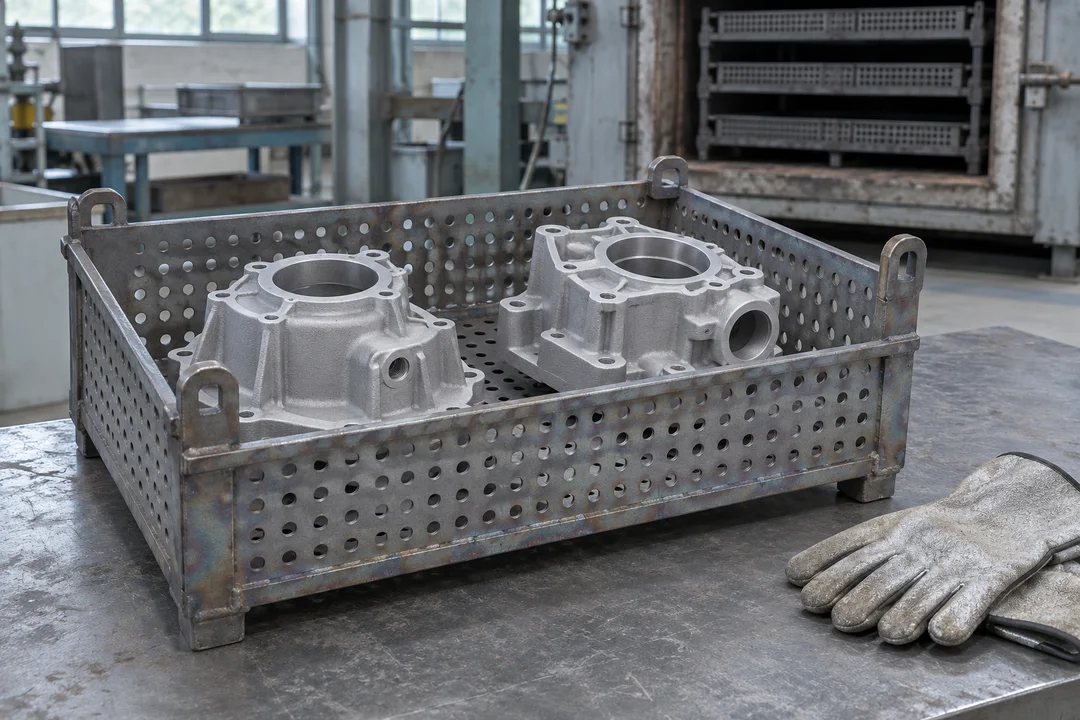
Gate and Riser Removal — Separate process features without damaging the part or consuming required machining stock.
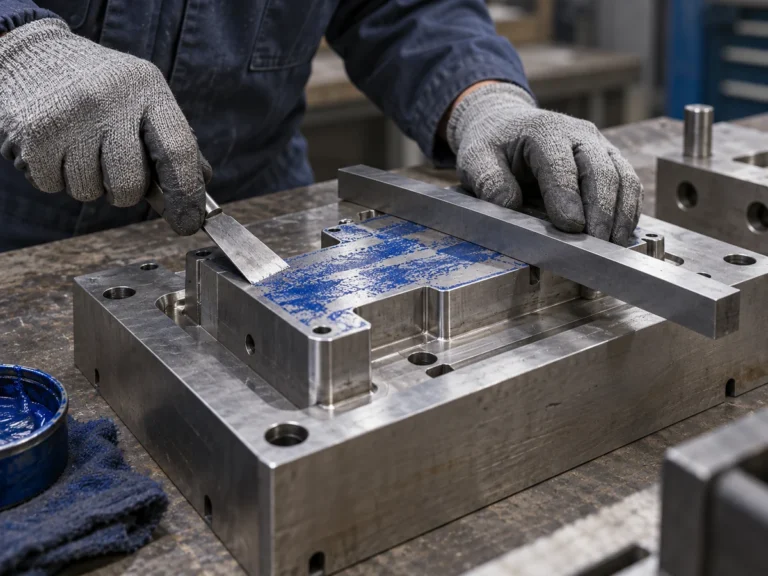
Grinding & Deburring — Blend flash, parting lines, transitions, and local surface features to the agreed condition.
Heat and Geometry Control
Heat treatment / Straightening & stabilization
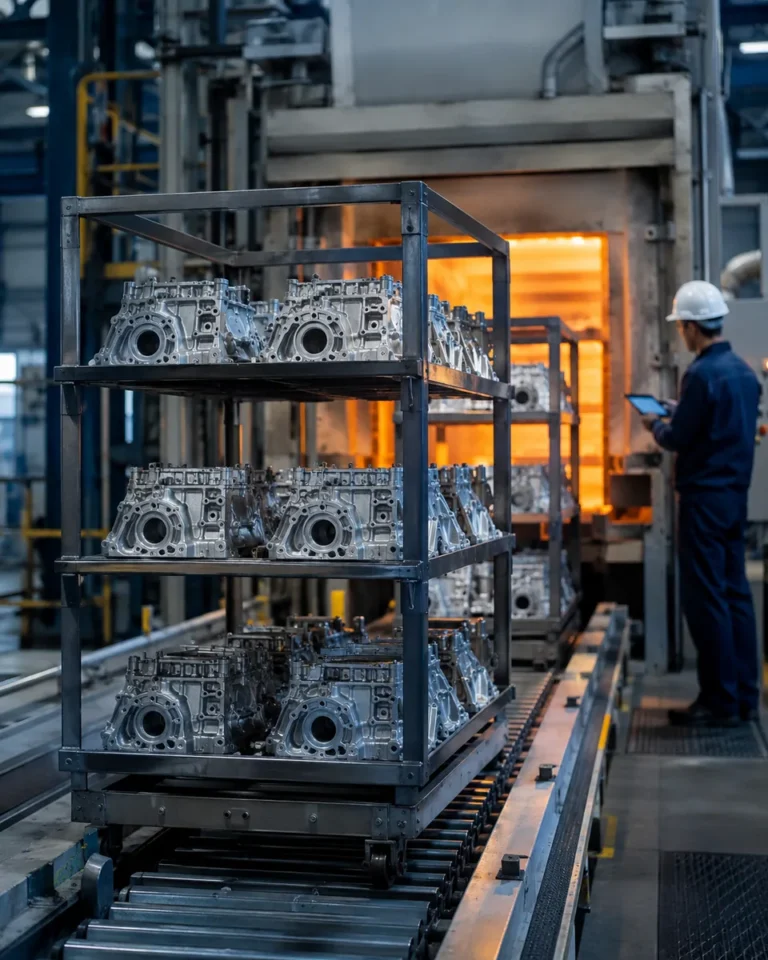
Heat Treatment — Coordinate solution, aging, temperature, time, quench, and handling with alloy and performance needs.
Straightening & Stabilization — Recover critical geometry and confirm the condition before machining release.
Surface Cleanup
Shot blasting / Sand blasting
Shot Blasting — Clean and texture robust surfaces with controlled media and exposure.
Sand Blasting — Prepare surfaces and complex areas where a different texture or cleaning action is required.
Manufacturing Process
Post-Casting Treatment Process
Seven steps prepare the raw casting for downstream machining and final production requirements.
01
Incoming Casting Check
Confirm part identity, process condition, visible defects, and treatment requirements.
02
Cutting & Trimming
Remove gates, risers, runners, flash, and core remnants using controlled methods.
03
Initial Surface Work
Grind, deburr, and clean areas that require access before thermal treatment.
04
Heat Treatment
Apply the specified T4, T6, T7, or T8 process with controlled loading and traceability.
05
Straightening
Measure and correct distortion against datums and downstream machining needs.
06
Blasting & Cleaning
Create the required clean, uniform surface for inspection, machining, or finish.
07
Release Inspection
Verify appearance, geometry, hardness, or other agreed characteristics before the next step.
Technical Information
Heat Treatment and Geometry Control
Thermal cycles can improve material performance while also changing geometry. Fixtures, loading, quenching, straightening, and inspection points are therefore planned as a connected control process.
Heat-treatment processes
T4, T6, T7, T8
Mechanical preparation
Cutting, trimming, grinding, deburring
Surface preparation
Shot blasting, sand blasting, cleaning
Geometry management
Measurement, straightening, stabilization
Next operations
CNC, coating, painting, anodizing, assembly
Quality Control
Post-Treatment Inspection
A part is not considered ready because treatment is complete; it is ready when the required condition has been verified for the next process.
Batch traceability
Thermal process and treatment condition can be connected to the production batch.
Hardness verification
Hardness or related material checks can confirm the specified heat-treatment response.
Datum protection
Critical surfaces and machining stock are protected during removal and surface preparation.
Geometry confirmation
Distortion-prone features are checked before machining consumes correction allowance.
T4, T6, T7, and T8 processes can be planned according to alloy, mechanical requirements, dimensional stability, and the downstream process.
Why is straightening performed before machining?
Correcting distortion before critical machining helps protect stock allowance, datums, wall thickness, and the ability to hold final tolerances.
What is the difference between shot and sand blasting?
They use different media and action to achieve the required cleaning, texture, or preparation. The choice depends on part strength, surface condition, geometry, and final finish.
Can post-casting treatment be supplied without casting?
Yes, subject to reviewing the incoming part condition, alloy, traceability, treatment requirements, and the risks transferred from the original casting process.
Your Next Manufacturing Project
Request an Engineering Review
Share available CAD data, drawings or samples, alloy, quantity, critical tolerances, performance, finish, inspection, and target timeline. The team will recommend a practical process.
NDA-supported review · Flexible production quantities · Integrated engineering and quality supportRequest a Quote