Engineering-driven aluminum casting and precision manufacturing solutions

Resources
Technical articles and practical sourcing answers for aluminum casting and precision machining projects. Explore process guidance, material insights, inspection methods, and project planning FAQs.

Technical Knowledge
12 articles per page
-

Tensile Testing of Aluminum Castings Why Mechanical Properties Matter
Read Article: Tensile Testing of Aluminum Castings Why Mechanical Properties MatterFor aluminum castings used in medical devices, industrial equipment, robotics, automotive components, and other high-performance applications, dimensional accuracy is only part of the.
-

The Role of Metallographic Inspection in Aluminum Casting Quality Control
Read Article: The Role of Metallographic Inspection in Aluminum Casting Quality ControlIn aluminum gravity casting, visual inspection, mechanical testing, and non-destructive testing (NDT) are effective for identifying surface defects and macroscopic imperfections. However.
-

K-Mold Testing How to Improve Molten Aluminum Cleanliness and Casting Quality
Read Article: K-Mold Testing How to Improve Molten Aluminum Cleanliness and Casting QualityFor both gravity die casting and low pressure casting, the cleanliness of molten aluminum plays a critical role in determining the internal quality of the final…
-

Why Stabilization Heat Treatment Matters for Precision Aluminum Castings – Understanding T6 T7 and T8 Tempers
Read Article: Why Stabilization Heat Treatment Matters for Precision Aluminum Castings – Understanding T6 T7 and T8 TempersAs industries such as medical devices, semiconductor equipment, robotics, and industrial automation continue to demand higher precision and reliability, dimensional stability has become.
-
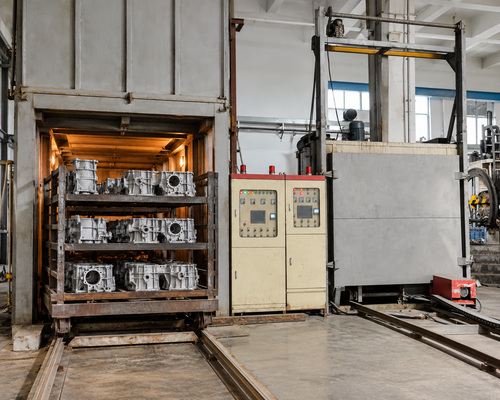
Why Is T6 Heat Treatment Widely Used for High-Performance Aluminum Gravity Castings
Read Article: Why Is T6 Heat Treatment Widely Used for High-Performance Aluminum Gravity CastingsT6 heat treatment is one of the most widely used strengthening processes for aluminum gravity castings. It is commonly applied to automotive components, industrial automation equipment.
-

A356 Aluminum Alloy Why Hydrogen Control Matters in Gravity Casting
Read Article: A356 Aluminum Alloy Why Hydrogen Control Matters in Gravity CastingIn gravity casting, the quality of molten aluminum has a direct impact on the performance of the final casting. For A356 aluminum alloy, hydrogen is the…
-

Application of Aluminum Alloy Castings in Automobile Industry
Read Article: Application of Aluminum Alloy Castings in Automobile IndustryThe automotive industry is the largest downstream market for aluminum alloy castings, and it also serves as the core driving force behind technological upgrades in the…
-

Aluminum Gravity Castings for the Rail Transportation Industry
Read Article: Aluminum Gravity Castings for the Rail Transportation IndustryAs the rail transportation industry continues to prioritize lightweight design, energy efficiency, and long-term reliability, aluminum gravity castings have become an essential solution for.
-
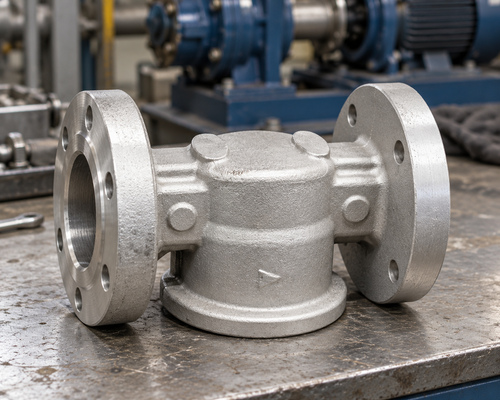
Application of Aluminum Alloy Castings in Industrial Machinery and Equipment
Read Article: Application of Aluminum Alloy Castings in Industrial Machinery and EquipmentIndustrial machinery and equipment constitute a major application field for aluminum alloy castings. Some mid-to-high-end industrial manufacturers rely on the high thermal conductivity and.
-
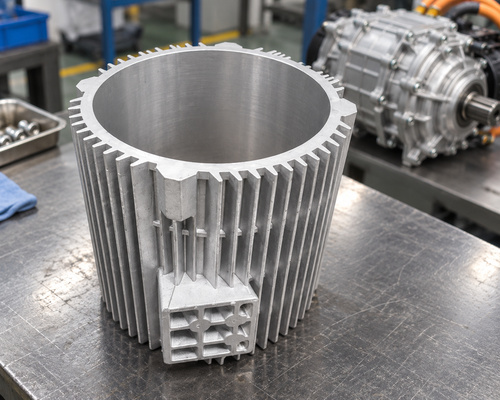
Aluminum Castings Supporting Lightweight and High-Performance New Energy Equipment
Read Article: Aluminum Castings Supporting Lightweight and High-Performance New Energy EquipmentAs the global transition toward clean energy accelerates, industries such as electric vehicles (EVs), solar power, energy storage, and wind energy continue to grow rapidly. This…
-

Engineering Case Study Aluminum Gravity Casting Structure for Precision Motion Control Systems
Read Article: Engineering Case Study Aluminum Gravity Casting Structure for Precision Motion Control SystemsThis aluminum gravity cast structural component is designed for precision motion control systems and is widely used in automation equipment, CNC machining platforms, and linear motion.
-

Why Do Aluminum Castings Still Cause Assembly Problems After Successful Trial Production Our Tolerance Design Solution
Read Article: Why Do Aluminum Castings Still Cause Assembly Problems After Successful Trial Production Our Tolerance Design SolutionMany aluminum castings pass dimensional inspections during the prototype stage, yet assembly problems still appear once the project enters mass production.
Answers for Sourcing and Project Planning
Find the documents, lead times, order quantities, manufacturing scope, inspection options, and confidentiality terms needed to start a project.
Information Required for an Accurate Quotation +
Please provide complete technical documents. A STEP AP214 3D model (.stp or .step) is preferred. A 2D PDF drawing should show tolerances, machining datums, draft angles, surface roughness, leak-tightness requirements, and heat treatment; DWG or DXF files are optional. Please also include the alloy grade, order quantity, required machining condition, surface treatment, and service environment.
Quotation Response Time +
Simple drawings are normally reviewed within one business day, with feedback available in about 12 hours. Complex parts that require DFM review are normally evaluated within 24 hours. Mark urgent projects clearly and our team will prioritize a same-day response where possible.
Minimum Order Quantity and Small-Batch Support +
Our standard MOQ is 10 pieces. Prototype and small-batch trial orders are supported and quoted separately. Delivery can be coordinated by project, and annual framework orders can be released in batches to reduce inventory pressure.
Available Casting and Supporting Processes +
Capabilities include gravity casting, sand casting, low-pressure casting, tooling design and manufacturing, three-axis to five-axis CNC machining, turning, drilling, tapping, deburring, grinding, polishing, shot blasting, ultrasonic cleaning, T6 or T8 heat treatment, stress relief, dimensional inspection, leak testing, spectrographic analysis, and salt-spray testing.
Commonly Used Aluminum Alloys +
Common grades include A356, A356.2, A357, A360, A380, AL106, ADC12, and AC4A. Customer-specified alloys are also supported, and material certificates or MTR documentation can be supplied when required.
Tooling Sampling and Production Lead Times +
Typical tooling lead time is 35 to 45 days, followed by a 30 to 40 day sampling cycle. Production processing is generally 30 to 40 days, while repeat batch orders are commonly completed in 30 to 45 days. Staged delivery can be arranged.
Custom Manufacturing Process +
The standard workflow is drawing submission, engineering evaluation, quotation, sample production, sample approval, volume production, quality inspection, packaging, and shipment.
Available Payment Terms +
Standard terms are a 50% deposit and 50% before shipment. The remaining balance is settled before the finished goods are dispatched.
Pre-Shipment Inspection Scope +
Inspection options include full dimensional checks, caliper and CMM measurement, leak testing, material spectrographic analysis, X-ray inspection, and salt-spray testing. Material certificates, dimensional reports, and heat-treatment reports can be supplied, and third-party inspection can be supported when agreed in the order.
Confidential Drawing and Project Data Protection +
Customer drawings and 3D models can be protected under an NDA, stored in encrypted internal systems, and restricted to project use within the factory. Files are retained or securely deleted after project completion according to the agreed requirement.