Engineering-driven aluminum casting and precision manufacturing solutions

Solid vs Hollow Sand Cores How to Choose the Right Core Design for Sand Casting
Sand cores play a critical role in sand casting by forming internal cavities, holes, and other complex features that cannot be created directly by the mold. The design and quality of a sand.
Sand cores play a critical role in sand casting by forming internal cavities, holes, and other complex features that cannot be created directly by the mold. The design and quality of a sand core have a direct impact on dimensional accuracy, internal soundness, and overall casting quality.
In foundry production, sand cores are generally classified as solid sand cores or hollow sand cores. Choosing the appropriate core design is essential, as an unsuitable core can contribute to defects such as gas porosity, sand adhesion, core breakage, distortion, and dimensional deviations.
Understanding when to use each type of core helps improve casting quality and process stability.
When Should a Solid Sand Core Be Used
1、Solid sand cores are typically recommended for small, narrow, or highly loaded core structures where maximum strength and rigidity are required.
Typical applications include:
- Small holes with diameters of 30 mm or less
- Short cylindrical cores
- Positioning cores
- Narrow slots and complex internal features
- Cantilever or slender cores
- Castings with relatively uniform wall thickness and simple internal cavities
- Applications exposed to high metal flow or strong erosion during pouring
Advantages of Solid Sand Cores
Solid sand cores provide excellent mechanical strength and dimensional stability. Their rigid structure helps reduce the risk of core breakage, core shift, and internal dimensional defects.
They are also easier to manufacture, making them a reliable solution for small and structurally demanding core applications.
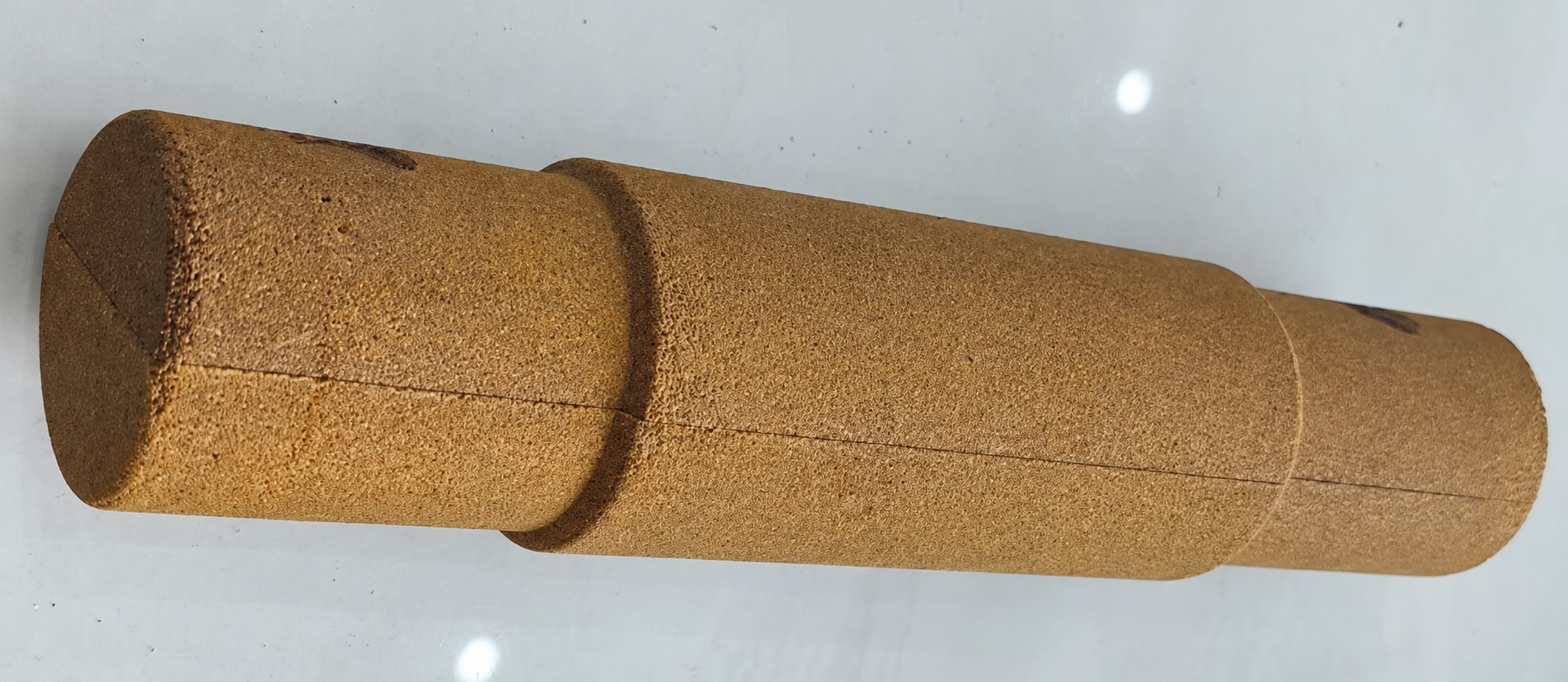
Figure 1. Solid Sand Core
When Should a Hollow Sand Core Be Used
1、Hollow sand cores are generally preferred for large or thick core structures where weight reduction, gas evacuation, and collapsibility become more important.
Typical applications include:
- Through holes with diameters of 40 mm or larger
- Long cylindrical cavities
- Large internal chambers
- Heavy or thick-section cores
- Thin-wall castings requiring improved heat dissipation
- Castings where core removal after pouring may be difficult
Advantages of Hollow Sand Cores
Compared with solid cores, hollow sand cores offer several important benefits.
(1)Reduced weight and more uniform drying
The hollow structure allows moisture to escape more easily during the baking process, helping reduce gas generation during pouring and minimizing the risk of gas porosity.
(2)Better collapsibility
As the casting solidifies and contracts, hollow cores collapse more readily, reducing the likelihood of hot cracking and casting distortion.
(3)Easier core removal
After casting, hollow cores break down more easily, simplifying shakeout and reducing cleaning and finishing time.
(4)Improved heat transfer
More uniform cooling around the core helps minimize shrinkage porosity and shrinkage cavities in thicker casting sections.
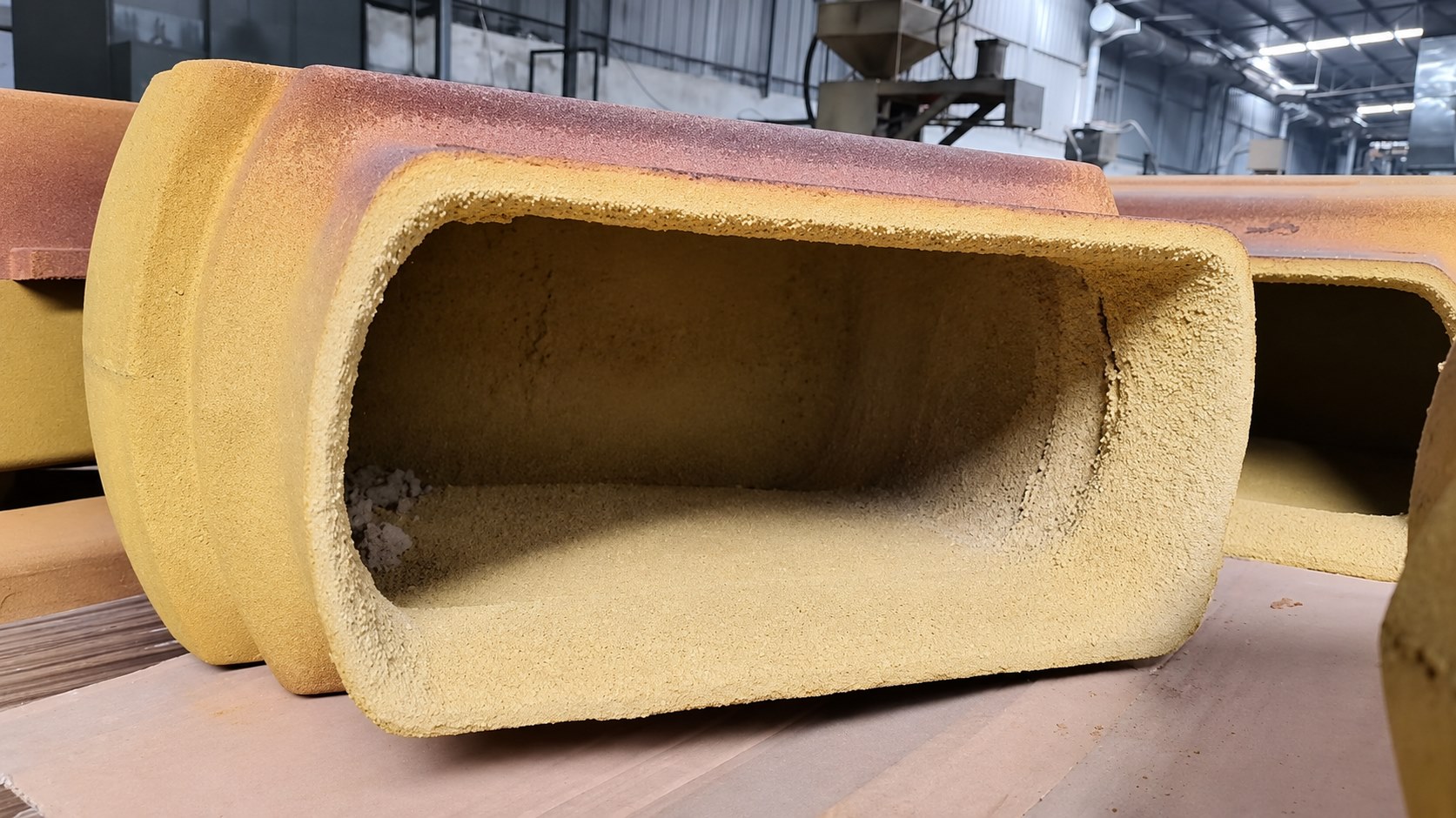
Figure 2. Hollow Sand Core
Conclusion
Neither solid nor hollow sand cores are universally better. The right choice depends on the casting geometry, wall thickness, core size, and production requirements.
By selecting the appropriate core design and combining it with proper core making, drying, and pouring practices, foundries can reduce casting defects, improve dimensional consistency, and achieve more stable production quality.