Ingenieurgetriebene Aluminiumguss - und Präzisionsfertigungslösungen

Why Do Many Aluminum Castings Still Fail Assembly After CNC Machining Choosing the Right Machining Strategy for Precision Aluminum Components
In industries such as new energy vehicles, hydraulic systems, robotics, and industrial automation, dimensional accuracy is one of the most critical requirements for aluminum components.
In industries such as new energy vehicles, hydraulic systems, robotics, and industrial automation, dimensional accuracy is one of the most critical requirements for aluminum components.
Why Do Many Aluminum Castings Still Fail Assembly After CNC Machining Choosing the Right Machining Strategy for Precision Aluminum Components
However, many manufacturers encounter the same problem:
The aluminum casting has already been machined, but the final assembly still reveals issues such as:
- Poor fit between mating surfaces
- Seal leakage
- Hole position deviations
- Interference between components
- Inconsistent dimensions in batch production
In many cases, the problem is not caused by insufficient CNC machine accuracy. Instead, it originates much earlier, when the wrong machining process is selected during the product development stage.
For precision aluminum castings, choosing the right combination of CNC turning, CNC milling, or mill-turn machining is often the key to achieving stable assembly performance.
Why Does Machining Alone Fail to Solve Some Assembly Problems
Aluminum castings are affected by multiple manufacturing variables, including:
- Casting shrinkage
- Core positioning deviations
- Residual stress
- Uneven machining allowance
- Fixture positioning errors
- Multiple setup operations
Simply increasing machining time cannot eliminate these variables.
Without proper process planning, manufacturers often experience:
- Excessive material removal
- Insufficient machining allowance
- Misaligned datum surfaces
- Reduced dimensional consistency
As a result, the finished part may still fail to meet assembly requirements.
CNC Turning The Best Choice for Rotational Aluminum Components
CNC turning uses a rotating workpiece while the cutting tool moves along a programmed path.
This process is ideal for rotational features such as:
- Outside diameters
- Inside diameters
- End faces
- Threads
- Circular sealing grooves
Typical applications include:
- Pistons
- Bushings
- Flanges
- Motor shafts
- Rotational valve components
For these parts, we optimize machining allowances during the casting stage and use dedicated fixtures to control concentricity and roundness, ensuring stable sealing performance and dimensional accuracy.
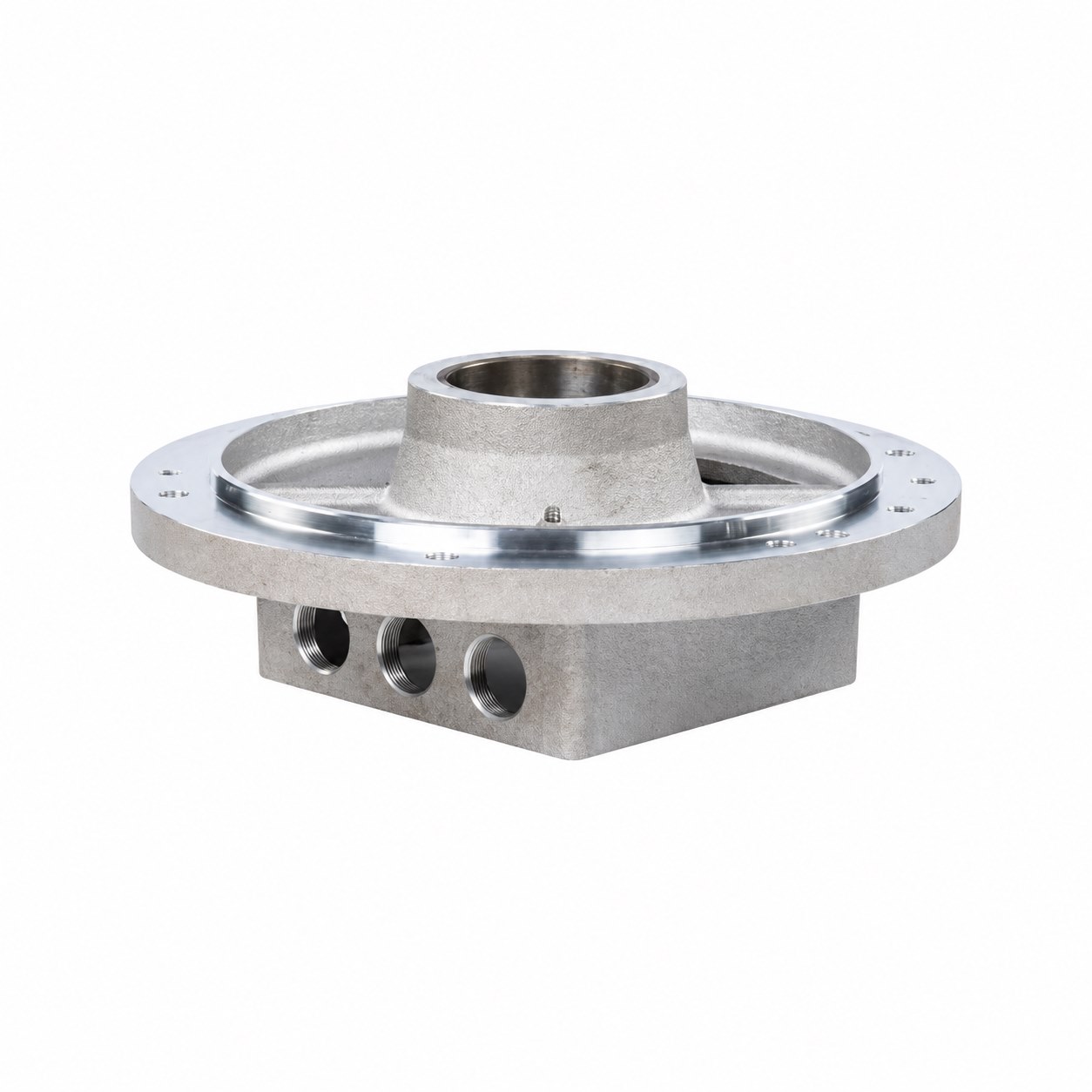
CNC Milling The Preferred Solution for Complex Aluminum Castings
Unlike turning, CNC milling relies on a rotating cutting tool while the workpiece moves along multiple axes.
This process is better suited for:
- Flat surfaces
- Complex cavities
- Mounting holes
- Grooves
- Angled features
- Three-dimensional surfaces
Typical applications include:
- Motor housings
- Gearbox housings
- Hydraulic valve bodies
- Cylinder heads
- Automation equipment brackets
Using 3-axis, 4-axis, or 5-axis machining centers allows multiple features to be machined in a single setup, significantly reducing positioning errors.
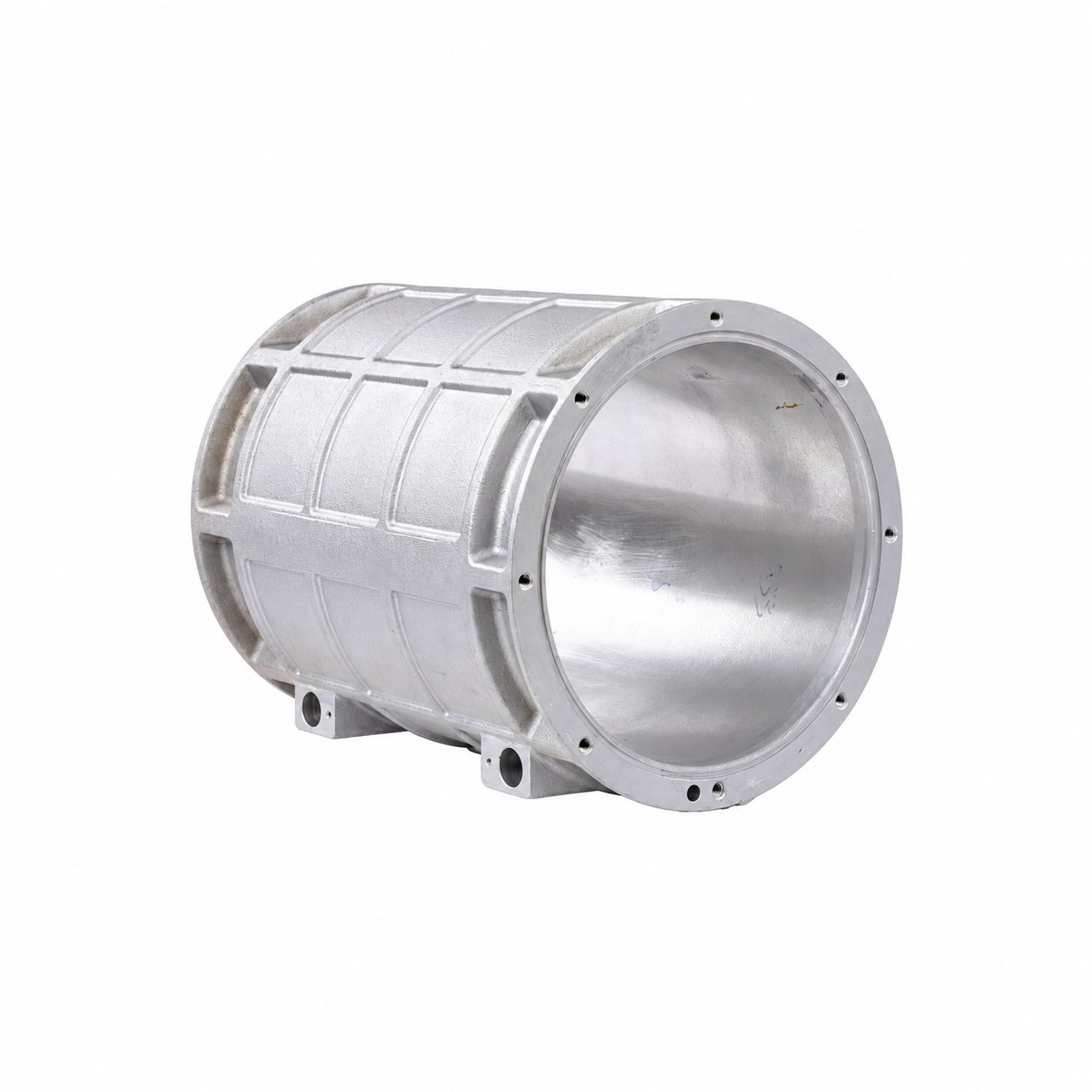
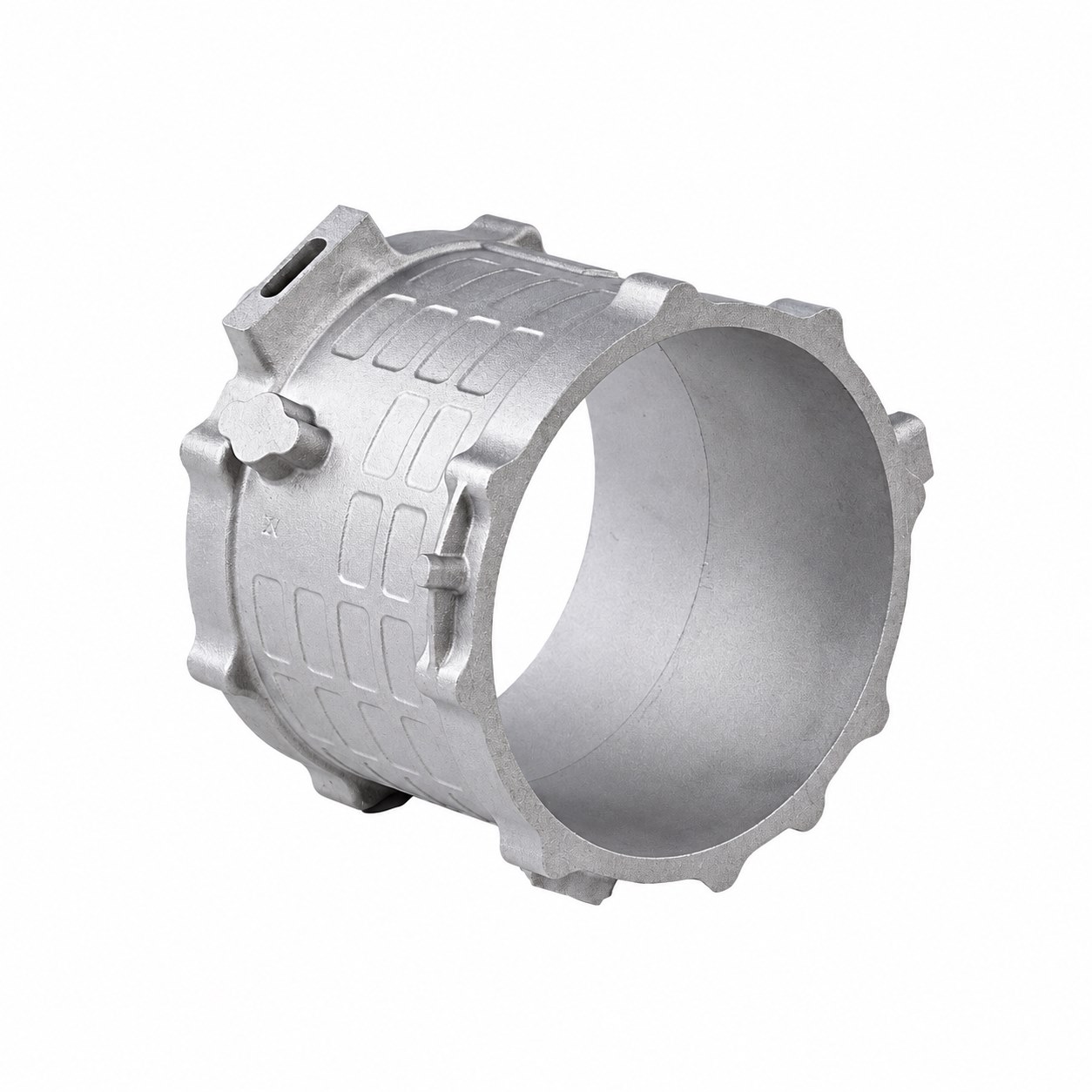
Why Mill-Turn Machining Has Become the Preferred Solution for Precision Aluminum Castings
Many high-performance aluminum components require both turning and milling operations.
For example:
CNC turning is used to machine precision bores and sealing surfaces.
CNC milling is then used to machine mounting surfaces, flanges, and threaded holes.
This combined machining strategy provides several advantages:
- Better sealing performance
- Higher assembly accuracy
- Improved machining efficiency
- Greater consistency in mass production
Our Solution Integrating Casting and CNC Machining into One Manufacturing Process
Successful machining begins long before a part reaches the CNC machine.
Our engineering team integrates the entire manufacturing process, including:
- DFM (Design for Manufacturability) analysis
- Machining allowance optimization
- CNC process planning
- Custom fixture design
- Mill-turn process evaluation
- CMM dimensional inspection
By combining aluminum casting, fixture development, CNC machining, and quality control into a single workflow, we help customers reduce rework, improve assembly performance, and achieve more stable production results.
If you're developing a new aluminum casting and are unsure whether CNC turning, CNC milling, or a combined machining strategy is the right solution, feel free to send us your drawings. Our engineering team can provide a customized manufacturing recommendation based on your specific application.