Engineering-driven aluminum casting and precision manufacturing solutions

How to Increase the Hardness and Tensile Strength of Aluminum Alloy Castings
The hardness and tensile strength of an aluminum alloy casting determine its load-bearing capacity, wear resistance, dimensional stability, and service life. For components used in.
The hardness and tensile strength of an aluminum alloy casting determine its load-bearing capacity, wear resistance, dimensional stability, and service life. For components used in demanding applications-such as automotive systems, industrial machinery, robotics, medical devices, and fluid control equipment-these mechanical properties are critical to long-term reliability.
The good news is that higher performance doesn't always require switching to a different alloy. By optimizing the casting process, heat treatment, and quality control, manufacturers can significantly improve mechanical properties while maintaining consistent product quality.
Grain Refinement During Melting
Mechanical performance begins with the quality of the molten aluminum.
During melting, grain refiners and modifiers are added alongside degassing and filtration processes to improve the alloy's microstructure. These treatments produce finer, more uniform grains while removing dissolved hydrogen and non-metallic inclusions that can weaken the casting.
Proper melt treatment provides several benefits:
- Finer and more uniform grain structure
- Reduced porosity and inclusions
- Improved material density
- Better hardness and tensile strength from the start
- Lower risk of cracking or premature failure
A well-prepared melt creates the foundation for consistent mechanical performance throughout the casting.
Optimized Casting Process
The casting process itself has a major influence on the final mechanical properties.
Processes such as gravity die casting and low-pressure die casting provide stable metal flow and controlled solidification, helping minimize casting defects that reduce strength.
Key process optimizations include:
- Stable mold temperature control
- Controlled filling speed
- Optimized cooling rate
- Reduced turbulence during pouring
- Improved feeding during solidification
These measures help reduce common defects such as:
- Gas porosity
- Shrinkage cavities
- Cold shuts
- Internal voids
Higher casting integrity leads directly to improved tensile strength and more consistent hardness across production batches.
Heat Treatment The Most Effective Strengthening Method
Among all manufacturing processes, heat treatment has the greatest impact on the mechanical properties of aluminum alloy castings.
Depending on product requirements, different heat treatment conditions-such as T5 or T6-can be applied to improve strength, hardness, and dimensional stability.
The T6 process typically includes:
- Solution heat treatment
- Quenching
- Artificial aging
This sequence creates a fine precipitation-hardened microstructure that significantly improves:
- Hardness
- Tensile strength
- Yield strength
- Fatigue resistance
- Structural stability
For high-load structural components, T6 remains one of the most widely used heat treatment processes.
Surface Hardening for Wear Resistance
Some applications require improved surface durability in addition to high structural strength.
Surface treatment processes such as hard anodizing and micro-arc oxidation (MAO) increase surface hardness and wear resistance without significantly changing the core mechanical properties of the casting.
These treatments are particularly suitable for components exposed to:
- Friction
- Abrasion
- Corrosive environments
- Repeated mechanical contact
When combined with heat treatment, they provide an excellent balance between internal strength and surface durability.
How Are Mechanical Properties Verified
Improving strength is only valuable if it can be verified consistently.
A comprehensive quality control system typically includes:
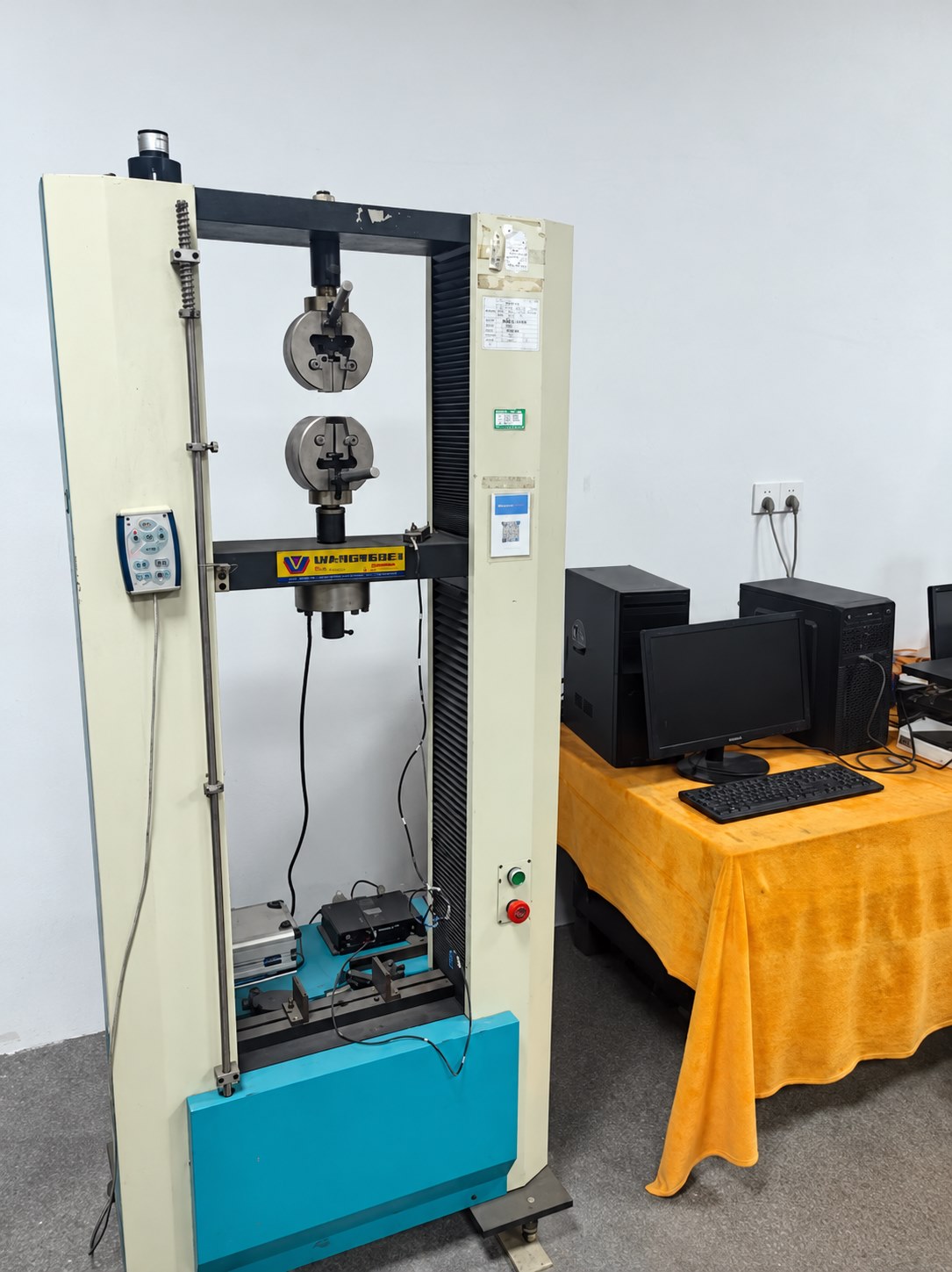
- Tensile strength testing
- Hardness testing
- X-ray (RT) inspection for internal defects
- Helium leak testing or pressure testing for pressure-tight components
- Metallographic analysis when required
These inspections confirm that the casting meets both mechanical and structural requirements before shipment.

Conclusion
Improving the hardness and tensile strength of aluminum alloy castings requires a combination of optimized melting, controlled casting, appropriate heat treatment, and rigorous quality inspection.
Rather than relying on a single process, manufacturers achieve the best results by controlling every stage of production-from molten metal preparation to final testing. This integrated approach produces aluminum castings with higher strength, improved durability, and consistent quality, making them suitable for demanding applications across the automotive, industrial equipment, robotics, medical, and fluid control industries.